Photo: nature.com
"Southern Ocean's Deep Waters Lock Away CO2 for Decades, Impacting Climate"
The Southern Ocean plays a crucial role in sequestering carbon dioxide, but changes in climate change impact its future effectiveness as a carbon sink.
- The Southern Ocean absorbs about 40% of global anthropogenic carbon dioxide, acting as a vital buffer against human-induced climate change.
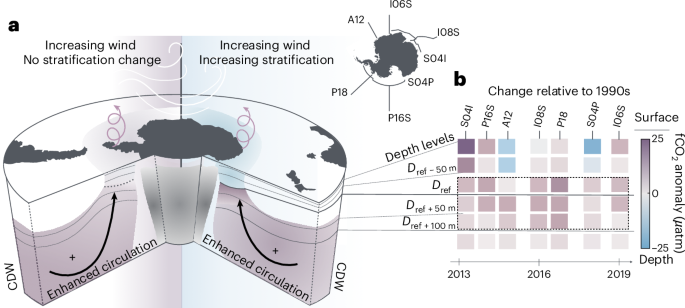
- Intensifying westerly winds due to stratospheric ozone depletion are expected to enhance the upwelling of carbon-rich deep waters, jeopardizing the carbon sink capacity of the Southern Ocean.
- Studies published in Nature Climate Change indicate that increased ocean stratification may limit the Southern Oceans ability to sequester carbon effectively, impacting atmospheric carbon dioxide levels.
Why It Matters
Understanding the dynamics of the Southern Ocean as a carbon sink is crucial for predicting future climate scenarios. Its decreasing efficiency could accelerate climate change, amplifying global warming impacts.