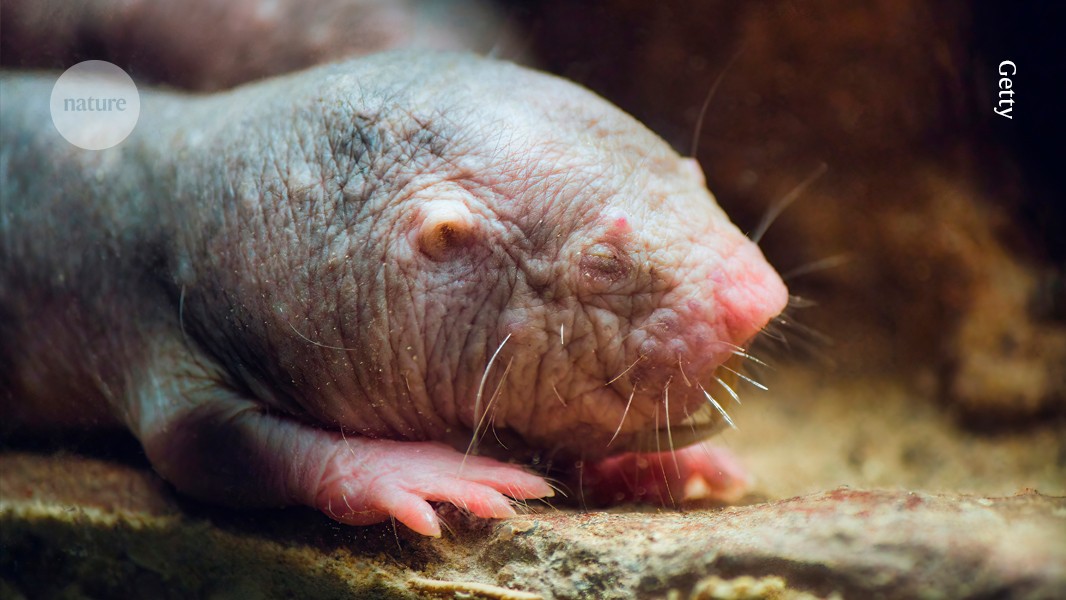
Photo: nature.com
Naked mole rats live for decades -- genetic tweaks reveal insights into ageing
Research on the Naked mole-rat reveals that four genetic tweaks could explain the rodents extraordinary longevity, shedding light on DNA repair mechanisms and potential cancer resistance.
- The Naked mole-rat can live for nearly 30 years, a remarkable lifespan for a rodent of its size, prompting studies into its unique genetic traits.
- Scientists identified four mutations in the Cyclic GMP-AMP synthase enzyme that enhance DNA repair, contributing to the Naked mole-rats longevity and cancer resistance.
- Comparative studies between Naked mole-rats and Mouse models show that the genetic adaptations in the former may hold keys to extending lifespans in other species.
Why It Matters
Understanding the genetic basis of longevity in the Naked mole-rat could revolutionize approaches to aging and disease prevention in humans, particularly regarding DNA integrity and cancer resilience.