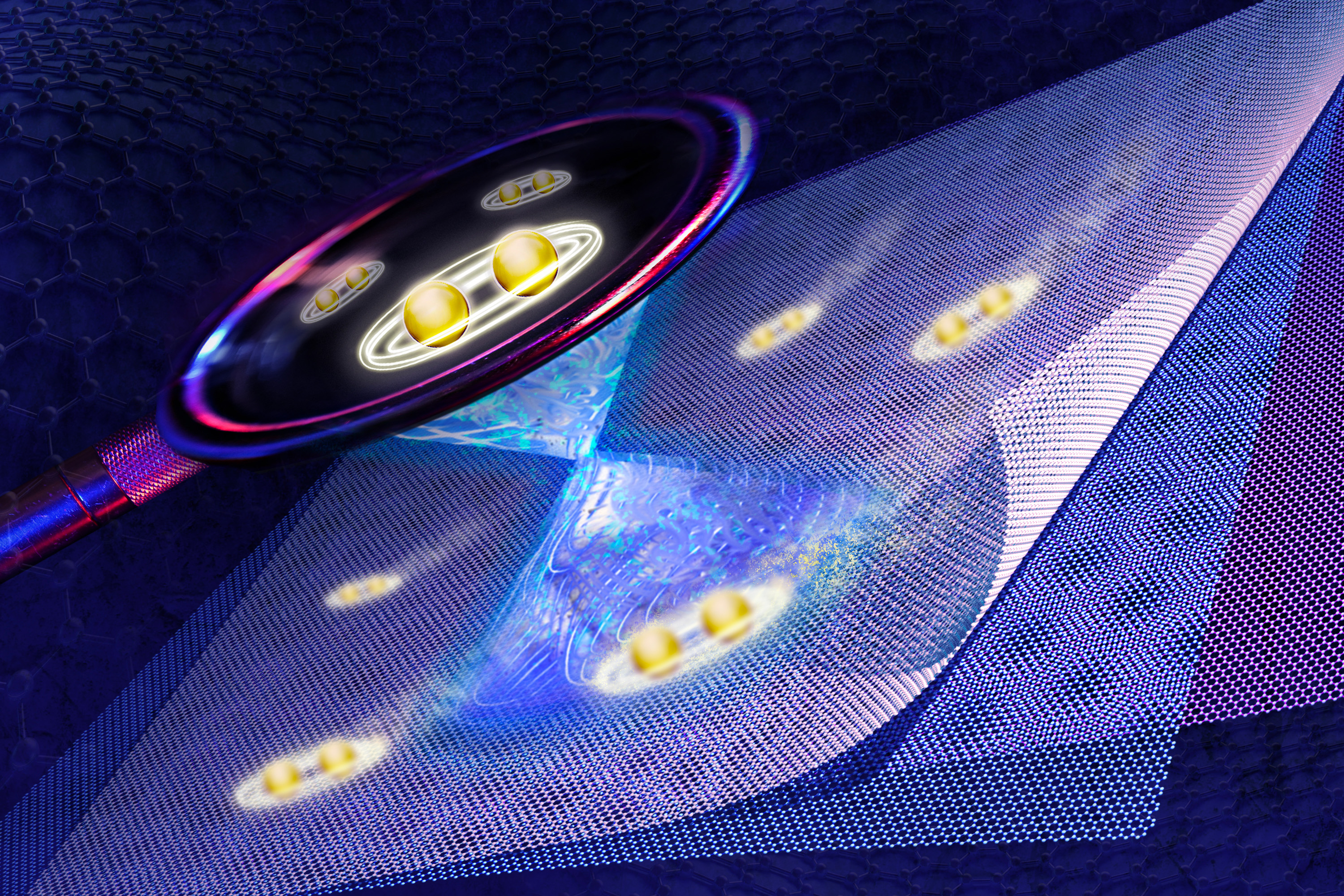
Photo: news.mit.edu
"MIT Physicists Uncover Breakthrough Evidence of Unconventional Superconductivity in Magic-Angle Graphene"
MIT physicists have discovered breakthrough evidence of unconventional superconductor behavior in graphene, which could revolutionize electronics and energy efficiency.
- Researchers at the Massachusetts Institute of Technology have provided breakthrough evidence for superconductivity in magic-angle graphene, a material composed of two layers of graphene twisted at a specific angle.
- The experiment demonstrated that quantum tunnelling in graphene can lead to the formation of a superconducting gap, revealing unprecedented electronic properties at low temperatures.
- This discovery enhances our understanding of unconventional superconductor behavior, potentially paving the way for advancements in physics and practical applications in energy-efficient electronics.
Why It Matters
This breakthrough in superconductivity highlights the potential for graphene to transform technology, impacting energy consumption and efficiency across various industries, including computing and transportation.