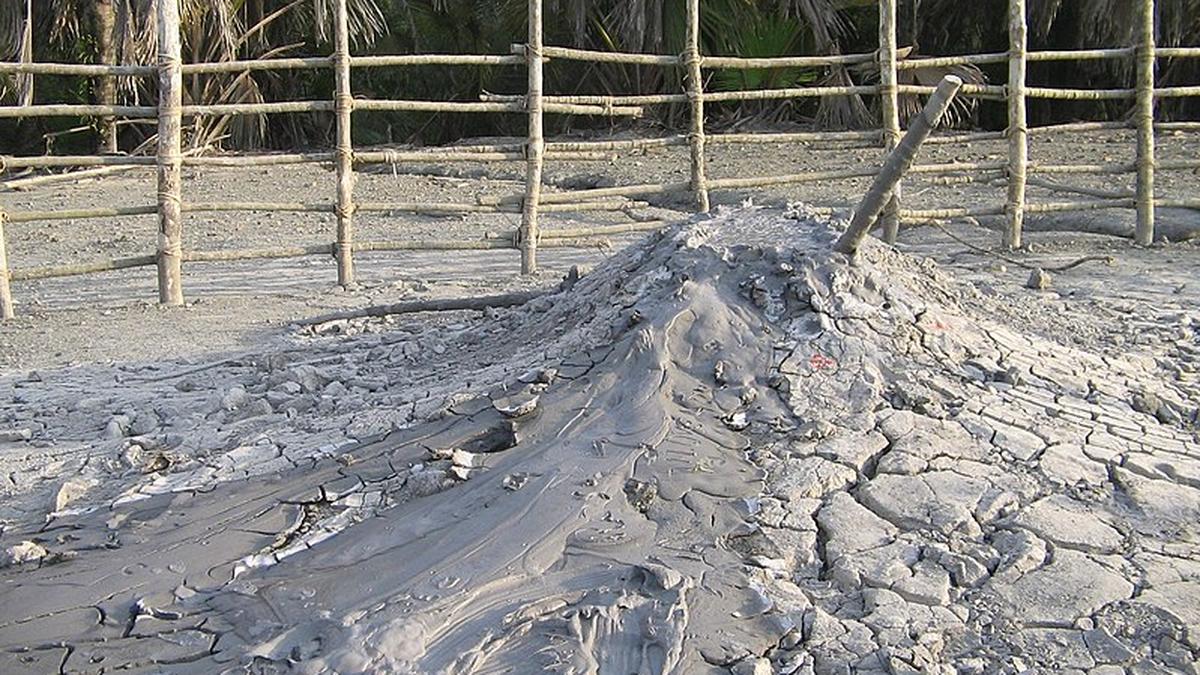
Photo: thehindu.com
India's Active Mud Volcano Samples Reveal Oligocene Age of 23 Million Years
Samples from Indias only active mud volcano reveal that the geological deposits date back to the Oligocene, providing insights into the regions ancient geological history.
- The Geological Survey of India confirmed that samples from the mud volcano at Baratang are 23 million years old, originating from the Oligocene period.
- Lithoclasts ejected from the volcanic crater include sandstone and shale from the Mithakari Group, which provides valuable data for the geologic time scale.
- The discovery enhances understanding of Indias geological evolution and highlights the significance of the mud volcano in studying past environmental conditions.
Why It Matters
This finding is crucial for understanding the geological history of India, particularly how ancient environments and landscapes have shaped current ecosystems. It also contributes to broader geological research on mud volcanoes and their role in the geologic time scale.