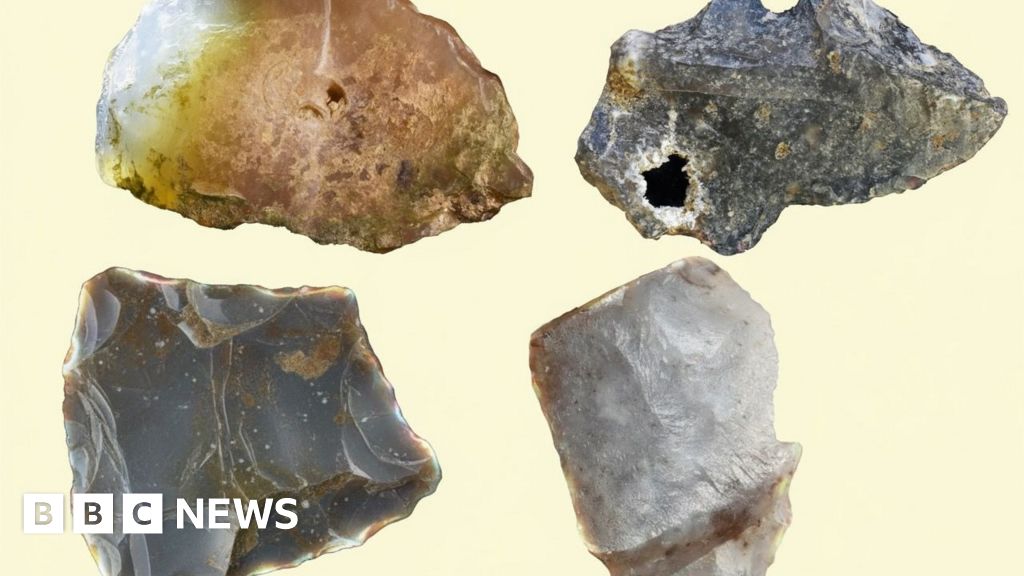
Photo: bbc.com
"Ancient Stone Tools Reveal Early Humans as Pioneering Inventors"
Archaeologists in Kenya discovered ancient Stone tool technology, revealing that early humans, including Homo species, were more innovative than previously thought.
- After a decade of research in Kenya, archaeologists uncovered 1,300 Stone tool artifacts, including hammerstone tools and lithic flake remnants from different geological layers.
- The tools, associated with the Oldowan technology, indicate a long history of tool-making behavior among Homo and Australopithecine ancestors in a semi-arid climate environment.
- Findings suggest that the use of Stone tool technology was widespread and continuous, challenging previous assumptions about the timeline of human innovation in diverse ecosystems like wetland and grassland.
Why It Matters
This discovery reshapes our understanding of early human ingenuity, indicating that tool-making practices may date back further than believed, highlighting the adaptability of our ancestors in varying climates.