Photo: edition.cnn.com
Ancient Hand Fossils Unveil Paranthropus boisei's Surprising Dexterity
The discovery of hand fossils from "Paranthropus boisei" in Kenya reveals surprising dexterity, suggesting this species may have used stone tools, challenging prior assumptions about early hominids.
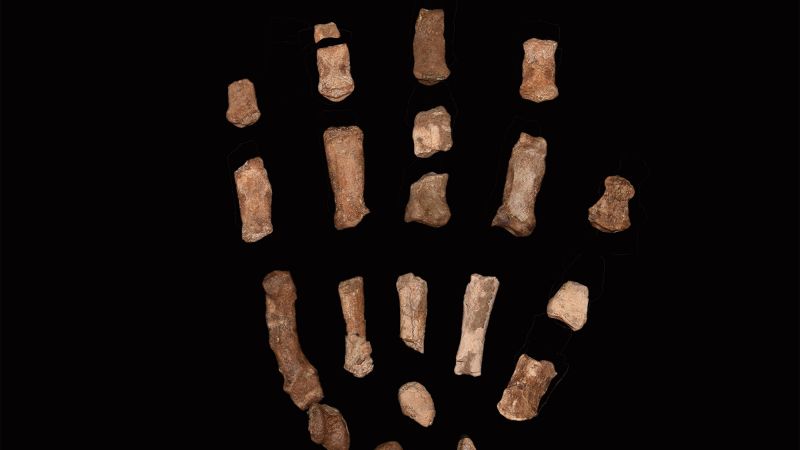
- Recently excavated "fossil" hand bones of "Paranthropus boisei" from Kenya indicate this species possessed a grip reminiscent of a "gorilla," suggesting advanced manipulation capabilities.
- Prior to this find, "Paranthropus boisei" was primarily recognized through its distinctive "skull" and large "tooth" structure, with molars significantly larger than those of modern humans.
- The hand fossils, found alongside other remains, provide new insights into the "Hominidae" lineage, implying that "Paranthropus boisei" might have utilized "stone tools" for various tasks.
Why It Matters
This discovery reshapes our understanding of early human relatives, emphasizing the potential for complex behaviors and tool use in "Paranthropus boisei," which could influence the study of human evolution.